Card games for and about autism: what they are and when to use them

7 October 2020
Guest blog by Jonneke Koekhoven: three card games for autistic children, about resilience, emotions and self-image, and when to use them.

My name is Jonneke Koekhoven, and I have worked with children and young people with autism for 14 years. Through my company KOEKIE, at symptomen-autisme.nl, I offer one-to-one support and give online advice and courses to parents. I always find new products that can support children with autism very interesting, and I like to try them out in my sessions. In this blog I will give my opinion and tips on three card games you can use with children with autism.

Learning through play, how does that work?

Card games with an educational goal are very popular. That is not surprising. When children play, they are more open to learning. Games can help a child relax. They help you connect with the child, and they make the time together enjoyable.

Therapy or training can sometimes feel tense for children with autism. A game can lower that tension. On top of that, the visual nature of games works well for the brains of children, with or without autism. They store information better. They can apply what they have learned more quickly in new situations. And their concentration stays higher while they learn.

Games that help children learn about themselves can be used in support sessions, therapy, coaching and the classroom. Parents and carers can use them at home too.

Game one: Okidootjes Resilience

What does it look like?

Okidootjes Resilience comes in a small card box. On the front, a kitten looks in the mirror and sees a lion. That sums up nicely what these cards are about: self-confidence, positive thinking and getting things done.

There are 51 coaching cards. Each one has a strong thought, with a specific trait of resilience underneath and a fun picture of an animal. The pictures fit the thought well. They make it clearer, and they give the cards a cheerful look. The box also has a few cards with explanations, tips and ideas on how to use the game.

All the cards have something to do with the child’s resilience. Resilience is the ability to respond flexibly at certain moments and to talk to yourself in a positive way. A strong inner voice gives you more resilience to keep your head above water in difficult situations.

How and when do you use this game with a child with autism?

There are many ways to use this game. Do you recognise the following in your child or pupil? Then these cards can be a good way to help.

  • Is the child unsure or tense about a situation that is coming up?
  • Does the child often have negative thoughts?
  • Does the child have a fixed mindset, and feel they have no influence on their own results?
  • Is the child struggling with a big change in their life, such as a new school, a death in the family, a house move or a new class?
  • Does the child find social situations hard, and withdraw at those moments?
  • Does the child often find it hard to make choices, and stay unsure whether the choice was right?
  • Does the child often think in problems rather than solutions?

One of the cards in the box explains these five ways to play.

  • Okidootje of the day or week: strengthen your resilience with the Okidootjes in everyday situations.
  • Tip-Top game: discover and learn through play how to look at yourself and others with a positive focus.
  • My top three: learn through play and discover how to look at yourself with a positive focus.
  • Six in a row, six tips for yourself: discover which traits of resilience you already have, and which ones you still need.
  • Top! Compliment game: discover and learn through play how to give a meaningful compliment.

You can also use them in these ways.

  • As a compliment after a session. As the coach, give the pupil a card to take home, to show what you are proud of.
  • As a goal for a child. Choose a card together with the pupil. The pupil then uses it as a goal for the coming period.
  • As a tool in psychoeducation. Use the cards to show what the child is already good at, and which challenges the child still has.

When I got this game, it came with a code to download the online version as well. That is a nice extra. It is an overview sheet with all the Okidootjes on one page. You could let the child cut out the Okidootjes and stick them in their psychoeducation or therapy book. That way the child can always look back at them. After a while, you can also reflect together on whether anything has changed.

Game two: What do you feel? What do you think?

What does it look like?

The box for What do you feel? What do you think? is square, eight by eight centimetres. It holds 55 emotion cards in three colours. Both the front and the back have a picture and text. The pictures are green and red smileys, each showing an emotion.

The cards look calm. There is no unnecessary information and there are no extra pictures. That makes it a pleasant game for children with autism who are sensitive to stimuli and distraction. The box also has a guide with several tips.

  • Dark green cards: complicated feelings.
  • Light green cards: pleasant feelings.
  • Red cards: unpleasant feelings.
  • Front: the feeling in words, with a facial expression.
  • Back: the feeling in words, with a facial expression and a thought.

How and when do you use this game with a child with autism?

Children with autism can find it hard to recognise and understand emotions. Both their own emotions and other people’s are often complicated. They take a lot of practice, repetition and experience.

Besides the four basic emotions that come up in so many trainings, videos, books and games, there are of course dozens of others. Children with autism can get very confused when they don’t understand emotions. In most cases that is because they don’t link the context to an emotion, or only partly. A thought is part of the context of a situation, and it affects emotions too.

A tip for using these cards, and for practising emotions in general. Never train a child on emotions and their facial expressions alone. That way a child doesn’t learn to link the emotion to a situation. Turn it around. Describe a situation and ask the child to link an emotion to it. “How do you think this child is feeling now?” “How would you feel if…?”

Do you recognise the following in a child? Then these cards can be a good addition to your support.

  • The child finds it hard to regulate emotions and has angry outbursts.
  • The child finds it hard to link emotions to a situation, and is easily thrown by other people’s emotions.
  • The child is highly sensitive, feels many different emotions and picks up on other people’s emotions.
  • The child behaves a lot younger than their age. These children often benefit from extra attention to different emotions. People often overestimate them here, and that leads them into difficult, confusing situations.

Game three: That’s how I see myself! Autism

What does it look like?

The cards for That’s how I see myself! Autism come in a sturdy, double orange box with a picture on the front. Inside are 50 double-sided statement cards, six situation cards, eight scale question cards and five information cards.

The cards have different coloured backgrounds. Each one shows a small picture of a face and a speech bubble with the statement in it. The box also has an explanation with several ways to play. The cards go with the books Me and Autism and Autism in Me, but they also work very well without the books.

How and when do you use this game with a child with autism?

These cards are made especially for children with autism, but the word autism itself doesn’t appear on them. So you can use them both with children who already know a lot about autism and with children at the start of psychoeducation.

The cards can have a positive effect on children who find it hard to talk about themselves. Because the cards give them examples, they can more easily say how they feel, what they think about certain things and why they react in a certain way.

There are several ways to play, whether you are a parent, teacher, therapist or support worker.

  • Make a mind map about the child together. Write the child’s name on a sheet of paper and choose a number of cards together that suit the child. Talk about the statement on each card.
  • Talk together about a situation that happened that day. Then look for a few statements that fit that situation. How did the child react, and which character trait can you link that to? Does the reaction have to do with the child’s autism or not?
  • Let the child choose a statement they think fits you, as their parent or support worker. Let the child explain why they chose that card. Then swap roles and tell the child why you think a certain statement fits them.
  • With the scale question cards, you can let children show where they are on the scale. How far does a certain statement apply to the child? This is a harder way to play. It is meant more for older children, and for children who have talked about themselves more often and know themselves well.

A nice extra: you can write on these cards with a whiteboard marker, to make notes or tick things off. That makes it more personal and interactive. Afterwards you can wipe the cards clean again. The box also has blank cards that you can use for exactly this.

KOEKIE’s view on the games

I am a big fan of using games and cards like these in my sessions. What I like most is that you have a guide, but you can still use the cards very flexibly. For each child you can look at which way to play suits them, and at which level.

I also find games and relaxation essential in support sessions. Only when a child can relax will they open up to talking, learning and reflecting. Games like these are perfect for combining those two goals.

During the games I often take photos of the cards the children choose. After a while I show them again. That way we can see how the child has grown and developed, and that helps their self-reflection and self-confidence.

I recommend every parent, teacher, therapist and support worker to look for a suitable game when a situation with a child is challenging or difficult. Besides the three games I have discussed here, there are of course many more card games, such as:

  • Feel Good Game
  • Compliment Game
  • Helping Thoughts
  • Junior Coach Cards
  • Kwaliteitenspel Plus
  • Praatplaatjes
  • Adolescent Coach Cards
  • Mirror Yourself Game

The Feel Good Game, the Compliment Game, Helping Thoughts, the Junior Coach Cards, the Adolescent Coach Cards and the Mirror Yourself Game are also available in the Autishop Games category. Enjoy learning with all these interesting card games for children!

This guest article by Jonneke Koekhoven (KOEKIE) was first published in Dutch on autishop.nl on 7 October 2020.
Lees ook eens

Checkpad tanden poetsen
The fourth time you ask: small steps to independence
Small steps to independence for autistic children and adults: visual planners, routines you can see, and how to hand over a little at a time.
sokken in de kleuren roze, wit, zwart, blauw en grijs
The waistband that itches: seamless underwear for sensitive skin
Seamless underwear and socks for autistic children and adults with sensitive skin: why seams and labels bother, what to look for and how to start.
Weekpeek
Coat on the floor: talking about feelings when words won’t come
Talking about feelings with an autistic child after a hard day: why words don't come, and how hands, pictures and quiet time can help.
ARK's ring kauwsieraad
The pencil with no end: Brick Stick or Krypto Bite as a first chew
Brick Stick or Krypto Bite? How to choose a first chew necklace for an autistic child or adult, which hardness to pick, and how to get it used.
Autishop naadloze sokken voor heren 41-46
The morning sock battle: seamless socks for autistic children
Seamless socks for autistic children and adults: why seams can ruin a morning, how to choose between cotton and heel-free socks, and how to get them on.
Magic Puzzle Connectable 4-Pack
The beeping robot: sensory gift ideas that actually get used
Sensory gift ideas for autistic children and adults: quiet fidgets and puzzles for birthdays and holidays, and how to give a present that gets used.
2016380295.jpg
Lights out, hands still busy: quiet fidgets for bedtime
Quiet bedtime fidgets for autistic children and adults: soft, glowing and calm Tangles and puzzles, and how to make them part of winding down.
Arks Tetra Bite
Pencil in the mouth, string in the hand: chewing and fidgeting
Chewing and fidgeting at the same time: why autistic children and adults often need both, and how chews and Tangles can share the job.
Tangle Classics Sleutelhanger
The waiting room, the queue, the bus stop: a fidget in every pocket
Pocket fidgets for autistic children and adults: why waiting is so hard, which fidget suits which moment, and how to keep one always in reach.
2014900599.jpg
The unicorn in the pencil case: choosing a fidget that fits the age
Fidget toys for autistic children, teens and adults: how to choose a Tangle that fits the age, the hands and the moment, from age three to the office.
Time Timer TWIST verpakking
The ticking clock: tools that help autistic children in the classroom
Classroom tools for autistic children: visual timers, seat cushions, ear defenders and picture cards that help at the desk. Practical tips.
Sensory Feet
The chair on two legs: sensory seeking and children who need more
Sensory seeking in autistic children and adults: what it looks like, which sense is asking, and simple ways to give more input at home and school.
Autisme in Kaart
The flipped board: games that teach without lecturing
Learning games for autistic children and adults: co-operative board games and card games that teach feelings and teamwork without a lecture.
2016380295.jpg
Twenty minutes in the waiting room: fidget puzzles for restless hands
Fidget puzzles for autistic children and adults: folding puzzles, rainbow balls and 3D twist puzzles that keep restless hands busy, and how to choose one.
Autishop naadloze sokken voor heren 41-46
The wrong sock: seamless socks and clothing for sensitive skin
Seamless socks for autistic children and adults with sensitive skin: why seams and labels matter, how to choose the right pair, and calmer mornings.
2014900599.jpg
Five on the table: which Tangle is which, and who it suits
Tangle fidget guide: Gems, Marble, Pets, Therapy Relax or Glow in the dark. Which feel suits which hands, and which moment of the day.
1459116701.jpg
The soggy sleeve: chew jewellery for children who chew everything
Chew jewellery for autistic children and adults: why some people chew everything, how to choose the right hardness, and how to get it used.
Green ear defenders on a kitchen table next to a school backpack
The hand dryer problem: when ear defenders help, and when they don’t
Ear defenders for autistic children and adults: what they do, which level to choose and how to get them worn. Practical advice from Autishop.
2016559935.jpg
The tipping chair: wobble cushions for children who can’t sit still
Wobble cushions for autistic children and adults: why sitting still is hard work, which cushion to choose and how to make it work in the classroom.
Het Grote Kijkboek voorkant
Four hours, twelve minutes: travelling with an autistic child
Travelling with an autistic child: how to prepare the car journey, the airport and the holiday house, with practical tips from Autishop.
Checkpad tanden poetsen
Is it swimming today? Visual schedules and planning the day
Visual schedules for autistic children and adults: why seeing the day helps, how to build one with pictograms, and how to keep it going.
NordicHug Weighted Hoodie
Under the sofa cushions: deep pressure and why weight can calm
Deep pressure for autistic children and adults: why firm pressure and weight can feel calming, how to choose a hoodie or vest, and how to start.
Comfort and sensory support in one piece of clothing
koekie mytimingcards
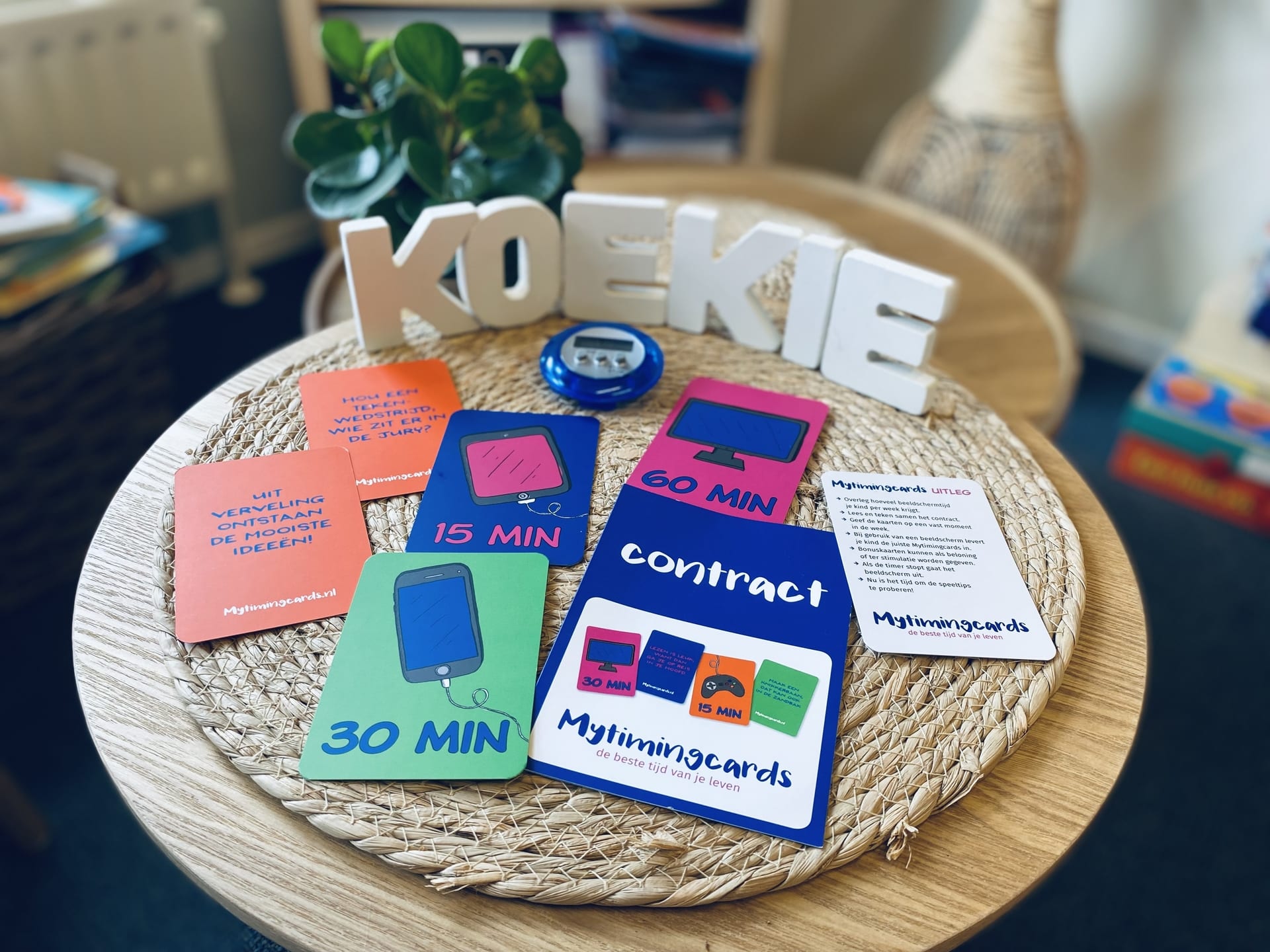
Mytimingcards – prevent discussions about screen time!
My name is Jonneke Koekhoven and I have been working with children and young people with autism for 17 years. Through my company KOEKIE (www.symptomen-autisme.nl) I offer individual guidance and provide online advice and courses to parents and professionals. I always find new products that can support children with autism very interesting and I like to try them out during my guidance. In this blog I will give my opinion and tips about the ‘Mytimingcards’!
Wat ga jij doen vandaag?
What are you doing today? A book and card game for young children
A guest review by Jonneke Koekhoven of What are you doing today? A rhyming book with daily routine cards and a memory game for children aged two to six.
Compliment game
Compliment Game Autism: a cheerful, positive game children grow from
Guest blog by Jonneke Koekhoven of KOEKIE on the Compliment Game Autism: what is in the box, why it suits children with autism, and tips for using it.

Openingstijden feestdagen

Nieuwjaarsdag
Gesloten
Goede Vrijdag
Gesloten
1e paasdag
Gesloten
2e Paasdag
Gesloten
Koningsdag
Gesloten
Bevrijdingsdag
Gesloten
Hemelvaartsdag
Gesloten
1e pinksterdag
Gesloten
2e pinksterdag
Gesloten
1e kerstdag
Gesloten
2e kerstdag
Gesloten