The waiting room, the queue, the bus stop: a fidget in every pocket

30 October 2026
Pocket fidgets for autistic children and adults: why waiting is so hard, which fidget suits which moment, and how to keep one always in reach.

In short

  • Waiting is hard work when you don’t know how long it will last and your hands have nothing to do.
  • A fidget only helps if it is there. Clip one to the keys, the school bag or the phone, so the waiting never starts empty-handed.
  • Something to twist suits short waits. Something to solve suits long ones.

It’s ten to four at the bus stop by the school. The screen above the shelter said two minutes. Now it says nine. A lorry goes past and sprays the kerb.

Your daughter has pulled the zip of her coat up and down twenty times. She has kicked the pole of the bus sign. She has asked how long it will be, and you have said “soon”, and you both know that “soon” is not an answer.

By the time the bus comes she is chewing her hair and close to tears. Nothing happened. That’s the point. Nothing happened for eleven minutes.

This one is about those minutes. The bus stop, the queue at the post office, the waiting room at the doctor’s. And about the small thing in a pocket that can make them easier.

Waiting is harder than it looks

From the outside, waiting looks like rest. You just stand there. For many autistic children and adults, it is anything but restful.

There is no clear end. Two minutes turns into nine. The doctor is running late, and nobody says by how much. The queue moves, then stops.

There is nothing to hold on to. The room is full of other people’s noise, other people’s smells, a television nobody chose. And you are not allowed to leave.

So the body finds its own way to cope. A zip goes up and down. A foot taps. A sleeve gets twisted. Fingers pick at skin. None of it is naughty. It is someone trying to get through.

The hands want something to do

A fidget gives those hands a job. Something to twist, turn or solve, over and over. It doesn’t make the bus come faster. It just gives the waiting a shape.

Many people find it easier to stand in a queue when their fingers are moving. The movement is steady, it repeats, and it belongs to them. Nobody else decides how fast it goes.

That is why the zip and the hair and the sleeve show up. They are fidgets too, just not very good ones. A real fidget is a better place for the same need.

Twisting for short waits, solving for long ones

Not every wait is the same, and not every fidget suits every wait.

For the bus stop and the queue, think twist. A Tangle is a loop of curved pieces that turn in every direction. There is no start and no finish, so it doesn’t matter when the bus arrives. It just goes back in the pocket. If two pieces pop apart, they click back together.

Tangles come in many finishes. Tangle Gems have a sparkling, iridescent finish and names like Blue Topaz, Red Ruby and Black Obsidian, which some children love to collect. The Tangle Fuzzie has a light velour layer and is the softest Tangle there is. For a child who calms down through touch, it often becomes the favourite.

For the waiting room, where twenty minutes can become forty, something to solve can work better. The Magic Rainbow Ball is a puzzle ball full of coloured balls with one empty space. You move the balls next to that space, one at a time, until every colour is back in the right place. A clear goal and clear rules. Many autistic children and adults enjoy exactly that.

The Clown Magic Puzzle Board is a flat folding puzzle. You fold it until the printed rectangles are all mixed up, then try to fold them back. It is light, makes no noise, and is meant for children from five.

One in every pocket, not one in the drawer

This is the part that matters most. The best fidget in the world does nothing in a drawer at home.

Waiting comes without warning. The train stops between stations. The till breaks down. The appointment that should take ten minutes takes an hour. You can’t plan for that. You can only make sure something is already there.

The Tangle Classics Keychain has a key ring. Clip it to the school bag, the pencil case or your own keys. Then it goes wherever they go, and nobody has to remember it.

Some families keep one Tangle per place. One on the school bag, one in the coat pocket, one in the car. When one goes missing, and one will, the next is already waiting.

Let your child choose the colour. A Gem they picked themselves is one they will reach for.

Mind the age. Tangles contain small parts, and the Keychain and the Fuzzie are not for children under three.

In class and in the waiting room

Tell the teacher. The Fuzzie is small, quiet and unobtrusive, made for class and homework. Agree that the fidget stays in the hand or the pocket, and it rarely becomes a problem.

The waiting room works the same way. Nobody minds a child turning a puzzle ball. Plenty of people mind a child climbing on the chairs.

Adults wait too

Waiting doesn’t get easier at eighteen. The GP surgery, the queue at the pharmacy, the platform when the train is late. Plenty of autistic adults twist a ring, click a pen or scroll a phone without reading anything.

The Tangle Phone Fidget sticks to your phone. You peel it, stick it and twist it. It wraps around your hand or wrist for a better grip, and it can prop the phone upright on a table. To anyone else, it is a phone accessory. To you, it is something to turn while the board says “delayed”.

A Gem in Black Obsidian, turning quietly in a coat pocket, is invisible to everyone but you.

Reading this for yourself? Notice where your hands go when you wait. Then give them something better.

Back at the bus stop

Same stop, a few weeks later. The screen says two minutes. Then nine.

Your daughter looks at it, sighs, and takes the purple Gem out of her coat pocket. She turns it, loop over loop, while a lorry goes by. She asks how long once. Not five times.

The bus is still late. It always is. But eleven minutes are just eleven minutes now.

Where to look

All our fidgets are in the Fidgeting category.
  • Always on the keys: Tangle Classics Keychain, a Tangle with a key ring for bags, keys and pencil cases, from age three.
  • To collect and to twist: Tangle Gems, Tangle Junior with a sparkling, iridescent finish, in colours such as Purple Amethyst and Black Obsidian.
  • The softest one: Tangle Fuzzie, with a light velour layer that feels velvety.
  • On the phone: Tangle Phone Fidget, peel and stick, and it doubles as a phone stand.
  • For a long wait: Magic Rainbow Ball, coloured balls and one empty space, to sort in as few moves as possible.
  • Flat in a coat pocket: Clown Magic Puzzle Board, a folding puzzle that makes no noise, from age five.

Lees ook eens

Checkpad tanden poetsen
The fourth time you ask: small steps to independence
Small steps to independence for autistic children and adults: visual planners, routines you can see, and how to hand over a little at a time.
sokken in de kleuren roze, wit, zwart, blauw en grijs
The waistband that itches: seamless underwear for sensitive skin
Seamless underwear and socks for autistic children and adults with sensitive skin: why seams and labels bother, what to look for and how to start.
Weekpeek
Coat on the floor: talking about feelings when words won’t come
Talking about feelings with an autistic child after a hard day: why words don't come, and how hands, pictures and quiet time can help.
ARK's ring kauwsieraad
The pencil with no end: Brick Stick or Krypto Bite as a first chew
Brick Stick or Krypto Bite? How to choose a first chew necklace for an autistic child or adult, which hardness to pick, and how to get it used.
Autishop naadloze sokken voor heren 41-46
The morning sock battle: seamless socks for autistic children
Seamless socks for autistic children and adults: why seams can ruin a morning, how to choose between cotton and heel-free socks, and how to get them on.
Magic Puzzle Connectable 4-Pack
The beeping robot: sensory gift ideas that actually get used
Sensory gift ideas for autistic children and adults: quiet fidgets and puzzles for birthdays and holidays, and how to give a present that gets used.
2016380295.jpg
Lights out, hands still busy: quiet fidgets for bedtime
Quiet bedtime fidgets for autistic children and adults: soft, glowing and calm Tangles and puzzles, and how to make them part of winding down.
Arks Tetra Bite
Pencil in the mouth, string in the hand: chewing and fidgeting
Chewing and fidgeting at the same time: why autistic children and adults often need both, and how chews and Tangles can share the job.
2014900599.jpg
The unicorn in the pencil case: choosing a fidget that fits the age
Fidget toys for autistic children, teens and adults: how to choose a Tangle that fits the age, the hands and the moment, from age three to the office.
Time Timer TWIST verpakking
The ticking clock: tools that help autistic children in the classroom
Classroom tools for autistic children: visual timers, seat cushions, ear defenders and picture cards that help at the desk. Practical tips.
Sensory Feet
The chair on two legs: sensory seeking and children who need more
Sensory seeking in autistic children and adults: what it looks like, which sense is asking, and simple ways to give more input at home and school.
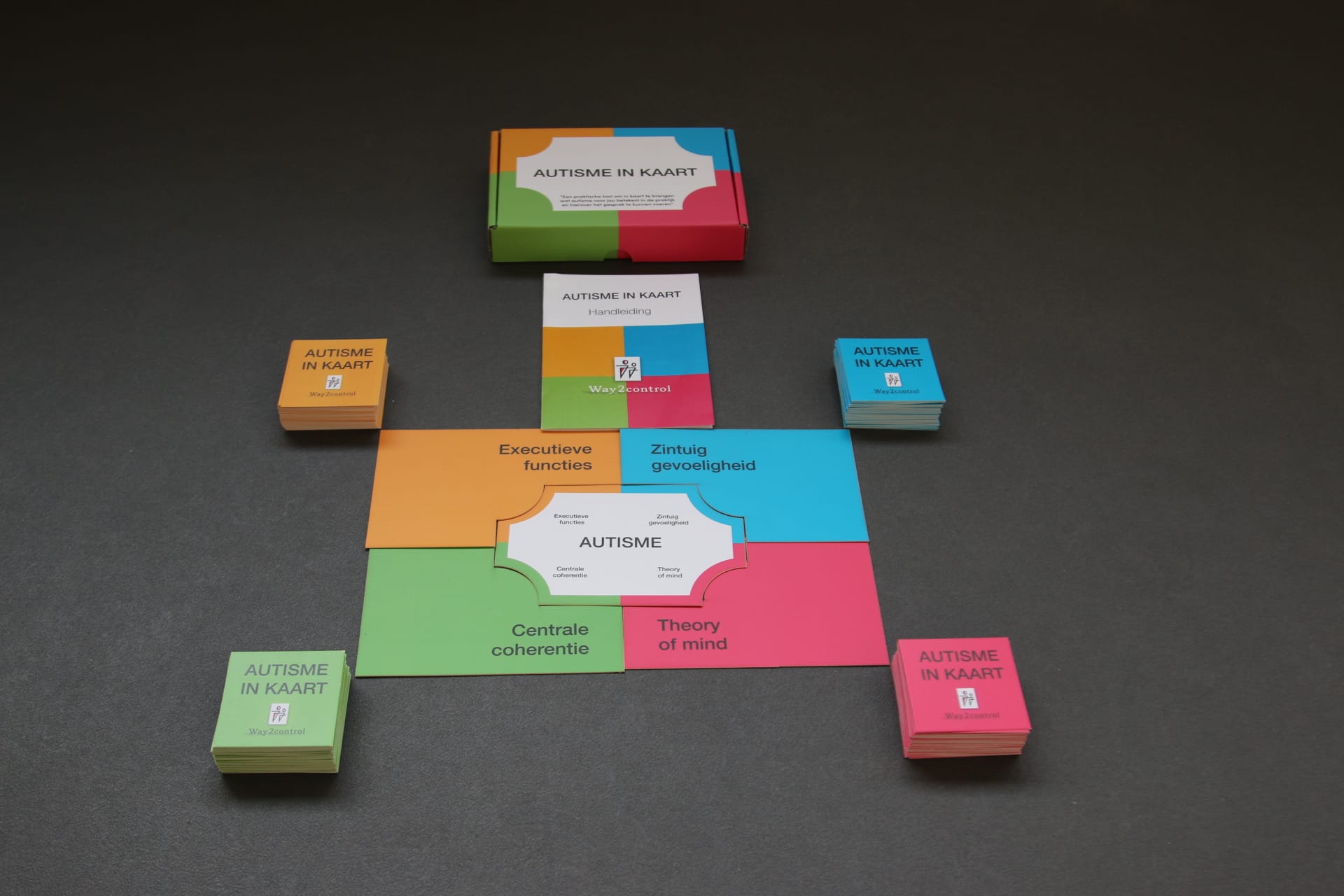
Autisme in Kaart
The flipped board: games that teach without lecturing
Learning games for autistic children and adults: co-operative board games and card games that teach feelings and teamwork without a lecture.
2016380295.jpg
Twenty minutes in the waiting room: fidget puzzles for restless hands
Fidget puzzles for autistic children and adults: folding puzzles, rainbow balls and 3D twist puzzles that keep restless hands busy, and how to choose one.
Autishop naadloze sokken voor heren 41-46
The wrong sock: seamless socks and clothing for sensitive skin
Seamless socks for autistic children and adults with sensitive skin: why seams and labels matter, how to choose the right pair, and calmer mornings.
2014900599.jpg
Five on the table: which Tangle is which, and who it suits
Tangle fidget guide: Gems, Marble, Pets, Therapy Relax or Glow in the dark. Which feel suits which hands, and which moment of the day.
1459116701.jpg
The soggy sleeve: chew jewellery for children who chew everything
Chew jewellery for autistic children and adults: why some people chew everything, how to choose the right hardness, and how to get it used.
Green ear defenders on a kitchen table next to a school backpack
The hand dryer problem: when ear defenders help, and when they don’t
Ear defenders for autistic children and adults: what they do, which level to choose and how to get them worn. Practical advice from Autishop.
2016559935.jpg
The tipping chair: wobble cushions for children who can’t sit still
Wobble cushions for autistic children and adults: why sitting still is hard work, which cushion to choose and how to make it work in the classroom.
Het Grote Kijkboek voorkant
Four hours, twelve minutes: travelling with an autistic child
Travelling with an autistic child: how to prepare the car journey, the airport and the holiday house, with practical tips from Autishop.
Checkpad tanden poetsen
Is it swimming today? Visual schedules and planning the day
Visual schedules for autistic children and adults: why seeing the day helps, how to build one with pictograms, and how to keep it going.
NordicHug Weighted Hoodie
Under the sofa cushions: deep pressure and why weight can calm
Deep pressure for autistic children and adults: why firm pressure and weight can feel calming, how to choose a hoodie or vest, and how to start.
Comfort and sensory support in one piece of clothing
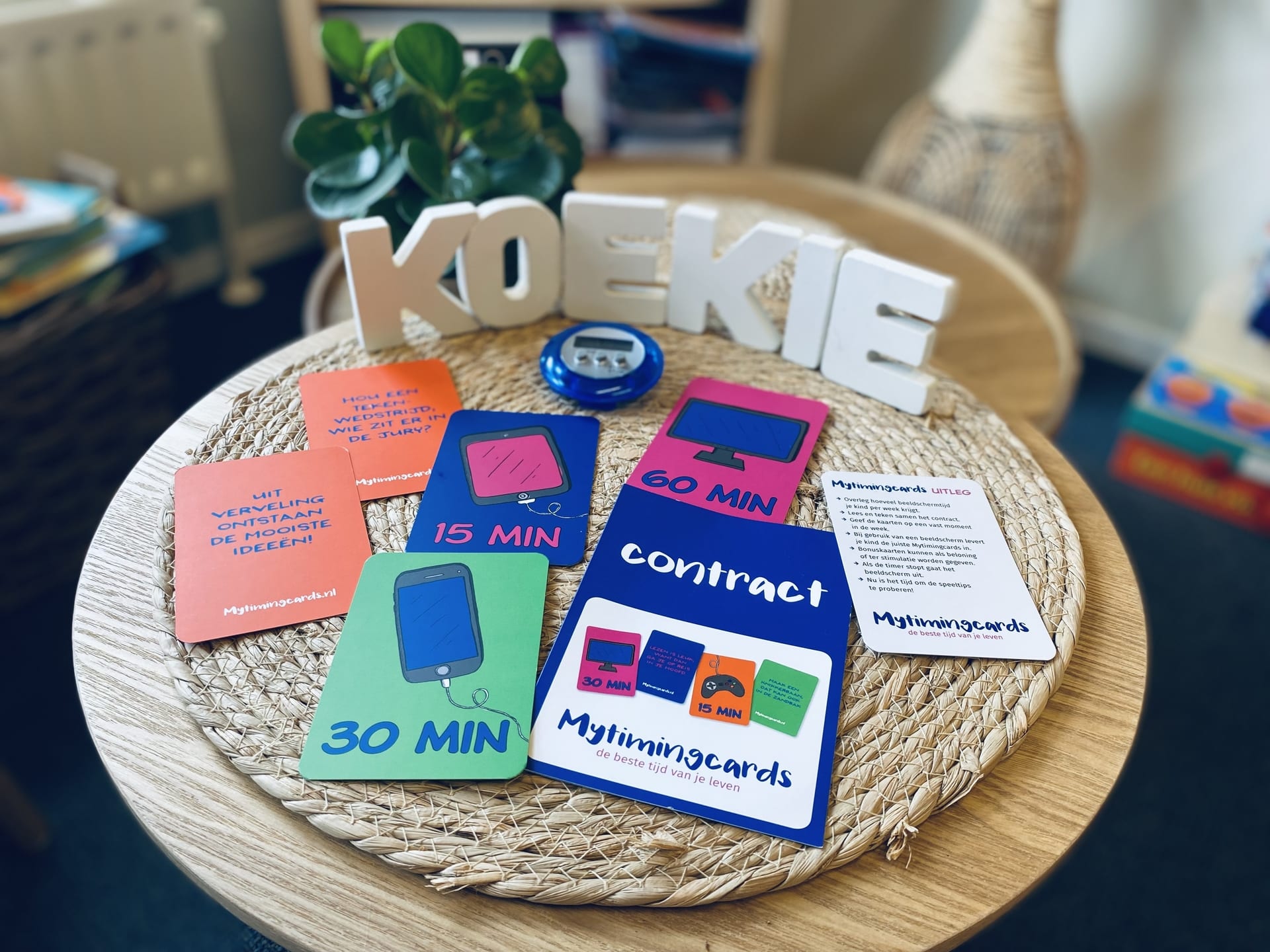
koekie mytimingcards
Mytimingcards – prevent discussions about screen time!
My name is Jonneke Koekhoven and I have been working with children and young people with autism for 17 years. Through my company KOEKIE (www.symptomen-autisme.nl) I offer individual guidance and provide online advice and courses to parents and professionals. I always find new products that can support children with autism very interesting and I like to try them out during my guidance. In this blog I will give my opinion and tips about the ‘Mytimingcards’!
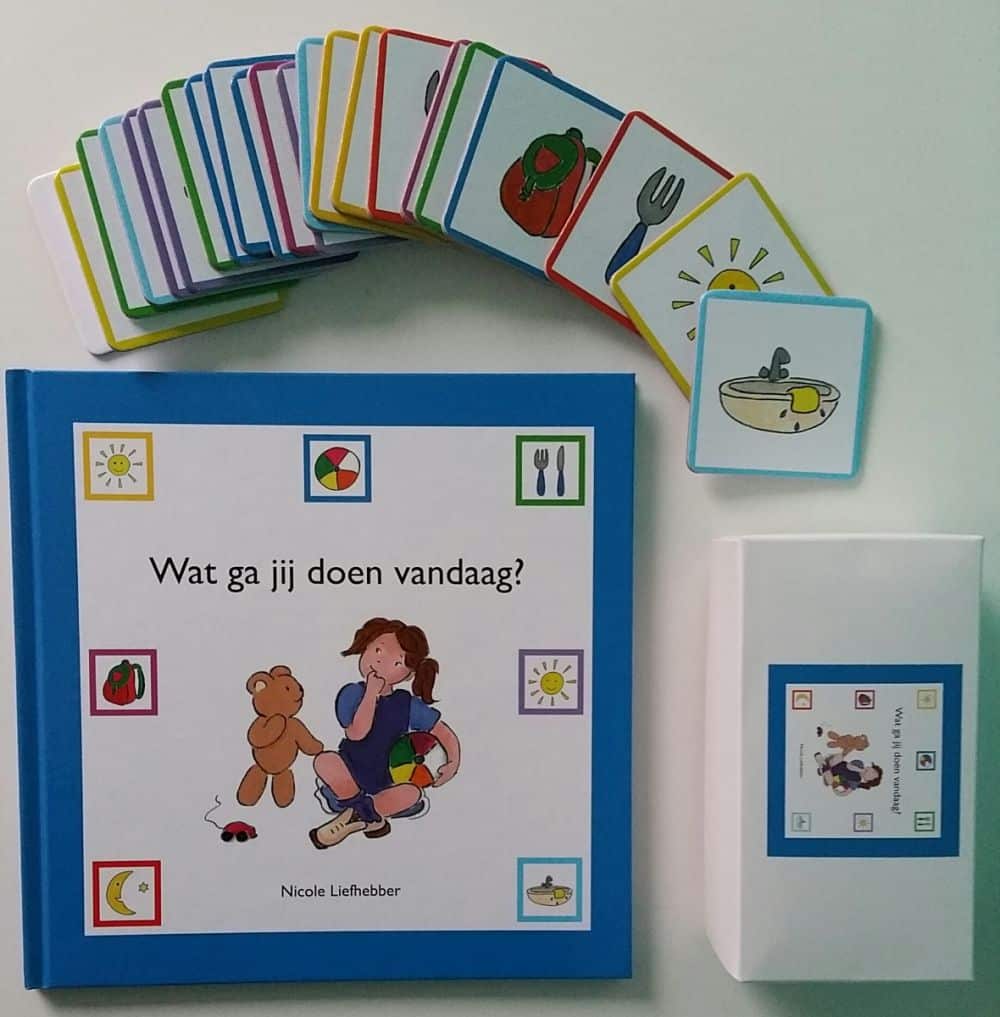
Wat ga jij doen vandaag?
What are you doing today? A book and card game for young children
A guest review by Jonneke Koekhoven of What are you doing today? A rhyming book with daily routine cards and a memory game for children aged two to six.
That's how I see myself! autism
Card games for and about autism: what they are and when to use them
Guest blog by Jonneke Koekhoven: three card games for autistic children, about resilience, emotions and self-image, and when to use them.
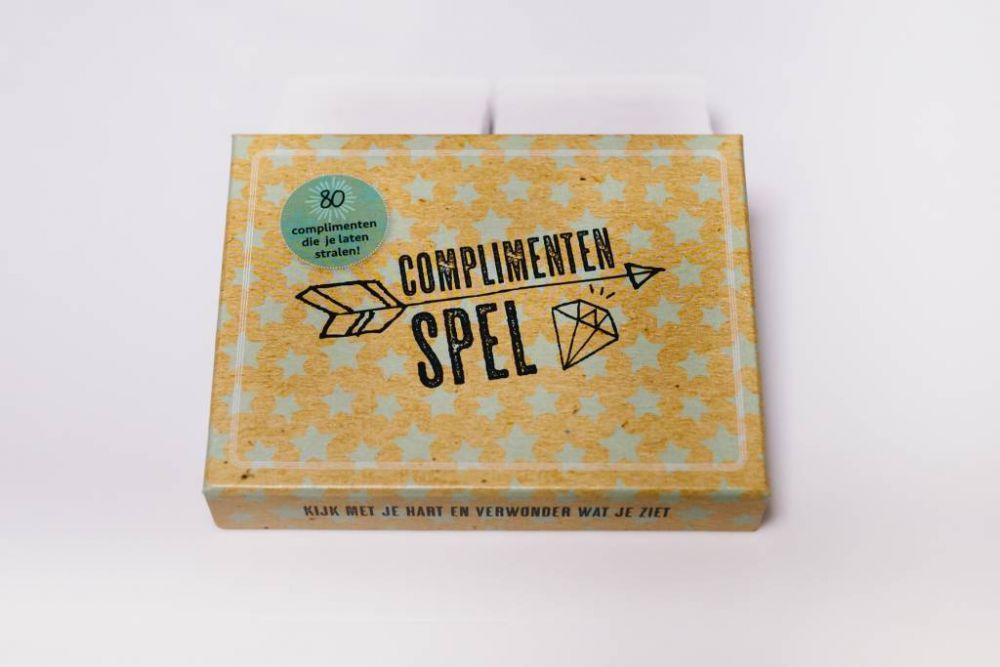
Compliment game
Compliment Game Autism: a cheerful, positive game children grow from
Guest blog by Jonneke Koekhoven of KOEKIE on the Compliment Game Autism: what is in the box, why it suits children with autism, and tips for using it.

Openingstijden feestdagen

Nieuwjaarsdag
Gesloten
Goede Vrijdag
Gesloten
1e paasdag
Gesloten
2e Paasdag
Gesloten
Koningsdag
Gesloten
Bevrijdingsdag
Gesloten
Hemelvaartsdag
Gesloten
1e pinksterdag
Gesloten
2e pinksterdag
Gesloten
1e kerstdag
Gesloten
2e kerstdag
Gesloten